Sunday, June 9, 2013

Nelson Mandela ‘serious’ in hospital

Nelson Mandela ‘serious’ in hospital


Former President Nelson Mandela has been admitted to hospital in South Africa with a lung infection. Nelson Mandela A presidential spokesman said he is in a "serious but stable condition", although he was able to breathe on his own – a "positive sign". Mr Mandela, 94, has been ill for some days but deteriorated overnight and was transferred to a hospital in Pretoria. He led the fight against apartheid and is regarded as the father of democratic South Africa. He has recently suffered a series of health problems and this is his fifth visit to hospital in two years. In April he was released from hospital after a 10-day stay caused by pneumonia. His illness was described on Saturday as a recurrence of a lung infection, which has troubled him repeatedly. Mr Mandela was taken to hospital, from his home in a suburb of Johannesburg, at about 01:30 local time (23:30 GMT Friday). Mac Maharaj, South Africa's presidential spokesman, told the BBC he was receiving expert medical care. Doctors were doing everything possible to make him comfortable and better, he added. "What I am told by doctors is that he is breathing on his own and I think that is a positive sign," he said. Mr Mandela's wife Graca Machel had been at his bedside since
the early hours of the morning, Sapa news agency quoted the presidential spokesman as saying. She cancelled a scheduled appearance at a meeting in London. "Naturally the immediate members of the family have access to him and it's always good for the patient that he has been accompanied by one or other of them, and that has happened," Mr Maharaj told the BBC. 'Symbol of hope' "President Jacob Zuma, on behalf of government and the nation, wishes Madiba a speedy recovery and requests the media and the public to respect the privacy of Madiba and his family," Mr Maharaj said in a statement, using the clan name by which Mr Mandela is often known. On the streets of Pretoria, people expressed their affection for their former president and their concern. Mamoshomo Tswai, a trader, said: "As long as Tata [father] is still alive then poor people like me, people who are down down, single mothers like me, we still have hope. South Africa is nothing without him." But another informal trader in Pretoria, who did not want give their name, said: "We must just accept that he is old. We love him, we all do, but we must start to accept that he is a very old man." Keith Khoza, a spokesman for the governing ANC, said Mr Mandela continued to be "a symbol of hope, to be a symbol of reconciliation" for South Africa. "We are certainly concerned about his health and we called on South Africans to pray for him and his family. "Even if you have an elderly person in the family who is sick and you expect something – once it happens the shock is still there." Damaged lungs Mr Mandela served as president from 1994 to 1999. He was previously imprisoned for 27 years, and is believed to have suffered damaged lungs while working in a prison quarry. He contracted tuberculosis in the 1980s while being held in jail on the windswept Robben Island. He retired from public life in 2004 and has been rarely seen in public since. There was a row in April when South Africa's governing African National Congress (ANC) – Mr Mandela's party – filmed a visit to see him and broadcast the pictures of him with President Zuma and other party figures. Critics called it an invasion of his privacy. Mr Mandela was awarded the Nobel Peace Prize in 1993 jointly with former President FW de Klerk for ending apartheid and bringing democracy to South Africa. BBC

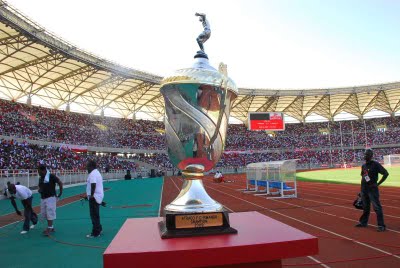
Kagame Cup: Govt to decide on Yanga, Simba participation


Kagame Cup: Govt to decide on Yanga, Simba participation


Tanzania Football Federation (TFF) president Leodegar Tenga has said the participation of Young Africans and Simba in the Kagame Cup rests in the hands of the government. Tanzania Football Federation (TFF) President Leodegar Tenga The annual Council for East and Central African Football Federation (CECAFA) club championship is set for June 18 to July 2 in North Darfur and South Gordofan, Sudan. Both clubs have insisted that they will not honour the competition without the blessing of the government which has warned that security conditions are critical in Darfur Region. Tenga told reporters in Dar es Salaam that TFF has already held consultations with the government which is assessing the security situation in Darfur. "We've given the government all the necessary details on the tournament, including teams' accommodation, security assurance, internal transport, etc and the government is now assessing the situation before making a decision," he said. "Security matters are outside CECAFA's power. So if the government discovers that there is insecurity in Darfur we will not allow our teams to go, but if it's satisfied that security is good it will let them," he added. "CECAFA's duty is to organise competitions and get assurance
of security from the host nations." "If we're guaranteed security, competitions will take place, but individual member- states have the right to question security arrangements because it is the duty of the respective governments to take care of the lives of their citizens." Tenga said CECAFA convened an emergency meeting on the sidelines of the FIFA Congress in Port Louis, Mauritius and was briefed on the preparations of the Kagame Cup by the Sudan Football Association. He added that member-states endorsed the report after they were guaranteed security. Meanwhile, Cecafa secretary general Nicholas Musonye has warned that the body will take stern measures against clubs that have decided to withdraw from the 2013 Kagame Cup. This follows the announcement that Kenya Premier League Champions Tusker FC have pulled out of the competition. "Our rules are very clear. A team that pulls out of any of our events after confirming is liable to face disciplinary action," he told Goal.com. "The executive committee will decide on the best action to take before the competition kicks off."

Wednesday, June 5, 2013

Chinese hackers have accessed designs of nearly 70 US weapons systems

Chinese hackers have accessed designs of nearly 70 US weapons systems, including those for Patriot missiles and Black Hawk helicopters.
The revelations made in a Defense Science Board report give details of 37 breached programmes, including the F-35 Lightning II.
Britain is buying 48 of the new Anglo-American fighter-bombers, which are being tested by Royal Navy engineers in the US.
It also includes the Terminal High Altitude Area Defense weapon - a land-based missile defence system that was recently deployed to Guam to help counter the North Korean threat.
Other programmes include the F-22 Raptor fighter jet and the hybrid MV-22 Osprey, which can take off and land like a helicopter and fly like a plane.The report also listed another 29 broader defence technology projects that have been compromised, including drone video systems and high-tech avionics.
While officials have been warning about the problem with Chinese cyber attacks for years, the breadth of the list underscores how routine they have become.
The disclosure heightens fears that the knowledge could be exploited by China in a conflict and blunt America's growing military presence in the Asia Pacific region.
James Lewis, a cybersecurity expert at the Center for Strategic and International Studies, said: "It introduces uncertainty on how well the weapons may work, and it means we may have to redo weapons systems.
China's global hacking headquarters in Shanghai
"If they know how it works precisely, they will be able to evade it and figure out how to better beat our systems."
President Barack Obama has come under intense pressure to crack down on China’s cyber espionage, and is expected to discuss the issue with Chinese President Xi Jinping during a meeting next week.
In November 2011, a report by US intelligence agencies accused China of systematically stealing American high-tech data for its own national economic gain.
The Pentagon, meanwhile, in its latest report on China’s military power, said publicly for the first time that Beijing’s military was likely to be behind computer-based attacks targeting federal agencies.
"In 2012, numerous computer systems around the world, including those owned by the US government, continued to be targeted for intrusions, some of which appear to be attributable directly to the Chinese government and military," said the report, which was released earlier this month.
Cyber security experts have urged the government to use sanctions or other punishments against China for the breaches.
The benefits of cyber espionage are high and the costs are low, said Shawn Henry, former cyber director at the FBI.
"There is no cost, there are no sanctions, no diplomatic actions, no financial disincentives," he said, adding that the US intellectual property losses are in the hundreds of millions of dollars.
He said the US needs to have a discussion with Chinese leaders about "what the red lines are and what the repercussions will be for crossing those red lines".
US leaders, including Mr Obama, however, have instead been using the bully pulpit to increase pressure on the Chinese to confront the problem.
Pentagon officials are playing down the report.
Pentagon Press Secretary George Little said: "We maintain full confidence in our weapons platforms.
"Suggestions that cyber intrusions have somehow led to the erosion of our capabilities or technological edge are incorrect."

Killer Robots: UN Official Joins Call For Ban

Killer Robots: UN Official Joins Call For Ban


A UN official joins a campaign to ban robots able to attack and kill without human direction, even though they don't exist yet.
The Campaign to Stop Killer Robots was launched in London last month
Robots that can attack and kill without human direction should be banned before they come into existence, according to a senior UN official.
Lethal autonomous robotics (LARs) have not yet been created but are described as "the next major revolution in military affairs".
New Campaign to Stop Unmanned Armed Vehicles Or Drones The Terminator-style weapons systems could select, engage and kill targets without further human intervention once activated.
Christof Heyns, UN special rapporteur on summary executions, called for a global moratorium as he presented a report to the Human Rights Council in Geneva.
"While drones still have a 'human in the loop' who takes the decision to use lethal force, LARs have on-board computers that decide who should be targeted," he said.
"The possible introduction of LARs raises far-reaching concerns about the protection of life during war and peace."
A MQ-9 Reaper drone. Picture: Ministry of Defence Their introduction will mean "machines and not humans, will take the decision on who is alive or dies,” he said, making it easier for States to go to war.
"If deployed, LARs will take humans ‘out of the loop'," Mr Heyns warned.
"States find this technology attractive because human decision-making is often much slower than that of robots, and human thinking can be clouded by emotion.
"At the same time, humans may in some cases, unlike robots, be able
to act out of compassion or grace and can, based on their understanding of the bigger picture, know that a more lenient approach is called for in a specific situation," he added.
Unmanned drones are controlled from thousands of miles away. Picture: MoD
In a summary of his 22-page report, he said: "Their deployment may be unacceptable because no adequate system of legal accountability can be devised, and because robots should not have the power of life and death over human beings."
The possibility of LARs, he adds, highlights concerns to "the extent to which they can be programmed to comply with the requirements of international humanitarian law and the standards protecting life under international human rights law".
He concludes: "The Special Rapporteur recommends that States establish national moratoria on aspects of LARs, and calls for the establishment of a high-level panel on LARs to articulate a policy for the international community on the issue."
Human Rights Watch is co-ordinating the Campaign To Stop Killer Robots, a new international coalition working to pre-emptively ban LARs.
HRW arms director Steve Goose said: "The UN report makes it abundantly clear that we need to put the brakes on fully autonomous weapons, or civilians will pay the price in the future.
"The US and every other country should endorse and carry out the UN call to stop any plans for killer robots in their tracks."
He adds: "It is possible to halt the slide toward full autonomy in weaponry before moral and legal boundaries are crossed, but only if we start to draw the line now."
Human Rights Watch and the Harvard Law School International Human Rights Clinic has published its own report, Losing Humanity: The Case Against Killer Robots, which outlines legal, ethical, policy, and other concerns with fully autonomous weapons.

Saturday, June 1, 2013

Dar, Tokyo sign lucrative power deal

Dar, Tokyo sign lucrative power deal


Tanzania and Japan's Sumitomo Corporation have sealed a 675bn/- deal that will see the latter constructing a 240 Megawatts power generating plant at Kinyerezi in Dar es Salaam. Deputy Permanent Secretary in the Ministry of Finance, Dr. Servacius Likwelele and Senior Officer of the SUMITOMO Corporation of Japan exchange agreement documents whereby 240 megawatts of electricity will be provided at Kinyerezi in Dar es Salaam. The signing ceremony held at the organization's Headquarters in Tokyo Japan yesterday. Looking on is President Jakaya Kikwete (left) and Chief Executive Officer of the Corporation, Kuniharu Nakamura. (Photo by Freddy Maro). A statement released in Dar es Salaam by the Directorate of Presidential Communications said the project would be undertaken under the Public Private Partnership (PPP). The signing ceremony was held yesterday in Tokyo and was witnessed by President Jakaya Kikwete who is currently visiting the Far East country. The Deputy Permanent Secretary in the Ministry of Finance and Economic Affairs, Dr Servacius Likwelile signed on behalf of the Tanzanian government, while the Sumitomo Chief Executive Officer Msayuki Hyodo did the same for the Japanese company. President Kikwete hailed the Japenese Company for showing its trust to invest in Tanzania's economy and helping save lives in Africa by investing in Arusha based A-Z factory, which produces mosquito nets, with 30 million of them having been distributed all over the country to date. Mr KiKwete also witnessed the signing of a cooperation agreement between Sumitomo Corporation and a local company, Quality Garage Limited, whose chairman and Chief Executive Officer, Yusuf Manji put pen to paper for his company, while Mr Takachiyo Tanaka signed for the Japanese company. Meanwhile, Masato Masato reports from Yokohama that Yokohama-based Inter-Continental Hotel, the venue of the fifth Tokyo International Conference on African Development (TICAD V), is as busy as a beehive as delegates from over 40 African nations and international organisations register for the meeting that starts this morning. President Jakaya Kikwete arrived here on Wednesday evening, leading a high-powered Tanzanian delegation to the Japanese government co-hosted three-day conference. Tokyo is using the five-yearly event to cement its relationship with the resource endowed African continent. Reports here have
it that the Japanese government is likely to pledge billions of US dollars in aid to Africa for the next five years while corporate investments, Japan's public and private sectors look set to invest about 30 billion US dollars into Africa by 2018. Despite relatively long-standing connections, Japan's weight on Africa is gradually waning away in favour of China, which has acquired five times the trading volume and eight times the direct investment, thanks to its aggressiveness. At the forum, Japanese officials will stress the need for the world's third largest economy to boost trade and investment with Africa and transform their relationship from the traditional aid to business-led partnership. Japan is striving to fortify relations with Africa and plead for African countries' support to its bid for a permanent seat on the UN Security Council. Tokyo is convinced that support from African countries, which account for a quarter of the UN membership, is inevitable to succeed in its bid. President Kikwete, briefing the Tanzanian delegation here on Wednesday, declared Dar's support to Tokyo's bid to the prestigious and powerful seat. While Japan uses the conference as an opportunity to maintain its diplomatic
clout with Africa, Tanzania is positioning itself strategically to attract Japanese investors to Dar es Salaam. "We have to be very strategic in taping the optimal benefits out of this conference," President Kikwete said during the briefing, ordering that potential investors be identified for one-to-one discussions. According to Tanzanian Ambassador to Japan, Salome Sijaona, the relation between Tanzania and Japan has remained good and always growing, with Japanese investors developing keen interest on Tanzania. "Japanese, after long years of confining themselves within their country, are now going out…we are getting a lot of inquiries from Japanese companies about the investment opportunities in Tanzania," said Ms Sijaona. Africa and Tanzania in particular, remains a potential business partner with Japan – offering markets for Japanese products and supplying raw materials to Tokyo's manufacturers. African countries, most of which sit on huge reserves of minerals and oil as well as other natural resources, are also emerging as last frontier for financial investors. Source Tanzania Daily News


Makerere to lead research on sleeping sickness


Makerere to lead research on sleeping sickness


Makerere University will lead a five-year research project aimed at eliminating sleeping sickness on the African continent. Makerere University During the launch of the project in Kampala on Thursday, the lead researcher, Dr. Enock Matovu, said the project will also cover the Democratic Republic of Congo, Ivory Coast, Guinea- Bissau, Burkina Faso, Cameroon, Malawi and Zambia. Matovu said they received $4m from Welcome Trust, a UK-based charity organisation. Sleeping sickness in human beings is caused by tsetse flies, which also cause nagana in animals.


TCRA to finance projects run by two varsities

TCRA to finance projects run by two varsities


Tanzania Communications Regulatory Authority (TCRA) will finance three projects to be
carried out by two universities after signing a Memorandum of Understanding (MoU). TCRA Director General, Prof John Mkoma The two higher learning institutions are the University of Dar es Salaam (UDSM), which will research on the use of Information and Technology to improve management of road safety and the University of Dodoma (UDOM) which will research on cyber realm and applying mobile technology for drugs verification. Speaking during the award of the research fund ceremony in Dar es Salaam yesterday, the TCRA Director General Prof John Nkoma, said the two universities were selected out of the 22 higher learning institutions which had submitted proposals. "UDOM will receive 200m/- per year for two projects while UDSM will receive 100m/- per year for one project," said Prof Nkoma. UDOM Vice-Chancellor, Prof Idris Kikula, thanked the TCRA for the support and he urged other local organs to emulate the authority. "We should change the
culture of depending on foreign donors…TCRA has shown the way and others should emulate it for our development," he said. He said local experts were conversant with challenges facing the country than foreign experts, saying the projects would facilitate to provide the country with best solutions on the problems. The Dean of College of the Informatics and Virtual Education at UDOM, Dr Leonard Msele, said the project would help to give a clear picture of the cyber crime. On his part, UDSM senior lecturer, Prof Nerey Mvungi, said 75 per cent of the road accidents were caused by reckless driving while the rest per cent is caused by human error, saying there was a need to introduce policy and stern measures to control road accidents. By LUDOVICK KAZOKA, Tanzania Daily News


Twitter Delicious Facebook Digg Stumbleupon Favorites More